

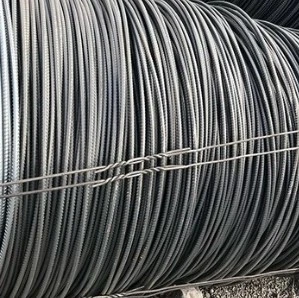
Wire Rod Coil is a fundamental steel product widely used in various industries due to its versatility, strength, and ease of processing. It is manufactured through hot rolling and is available in coils for efficient storage and transportation. In China, the production and quality of Wire Rod Coil are governed by stringent national standards, ensuring its suitability for a wide range of applications. This article provides an overview of the product's characteristics, uses, strength, and the relevant Chinese standards.

Chinese Standards for Wire Rod Coil
In China, Wire Rod Coil is produced in compliance with several national standards to ensure consistency, quality, and safety. The most prominent standards include:
GB/T 701-2008:
This standard specifies the requirements for low-carbon steel wire rods, which are commonly used for drawing, cold heading, and other processing applications. It covers dimensions, tolerances, mechanical properties, and surface quality.
GB/T 14981-2009:
This standard applies to hot-rolled round steel wire rods and defines their dimensional accuracy, shape, and weight tolerances.
YB/T 4160-2007:
This standard focuses on high-carbon steel wire rods, which are primarily used for manufacturing steel wires, springs, and other high-strength components.
GB/T 24238-2009:
This standard outlines the requirements for stainless steel wire rods, which are used in applications requiring corrosion resistance.
These standards ensure that Wire Rod Coil produced in China meets the necessary technical specifications for both domestic and international markets.
Applications of Wire Rod Coil
Wire Rod Coil is a versatile product with applications across multiple industries, including:
Construction:
Used as raw material for reinforcing bars (rebars) in concrete structures.
Manufacture of nails, screws, and other fasteners.
Automotive:
Production of springs, tire cords, and other components requiring high tensile strength.
Manufacturing:
Drawing into wires for fencing, mesh, and cables.
Cold heading to produce bolts, nuts, and rivets.
Energy and Utilities:
Used in the production of power transmission lines and communication cables.
Consumer Goods:
Manufacture of household items such as hangers, clips, and wire baskets.
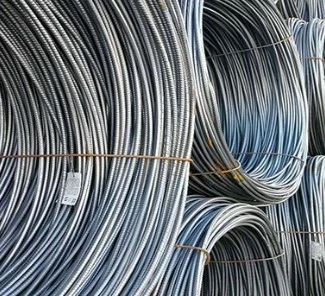
Product Characteristics
High Strength:
Wire Rod Coil is known for its excellent tensile strength, making it suitable for applications requiring durability and load-bearing capacity. High-carbon wire rods, in particular, offer superior strength for demanding uses.
Ductility and Formability:
The product can be easily drawn, bent, or cold-worked into various shapes without losing its structural integrity.
Surface Quality:
Wire Rod Coil is produced with a smooth surface finish, free from cracks and defects, ensuring optimal performance in downstream processing.
Consistency:
Adherence to Chinese standards ensures uniform dimensions, mechanical properties, and chemical composition across batches.
Corrosion Resistance (for Stainless Steel Variants):
Stainless steel wire rods offer enhanced resistance to rust and corrosion, making them ideal for harsh environments.
Strength and Mechanical Properties
The strength of Wire Rod Coil varies depending on its chemical composition and intended use. Key mechanical properties include:
Tensile Strength:
Low-carbon wire rods: Typically range from 300 MPa to 500 MPa.
High-carbon wire rods: Can exceed 1000 MPa, making them suitable for high-stress applications.
Elongation:
Wire Rod Coil exhibits good elongation properties, allowing it to withstand deformation without breaking.
Hardness:
The hardness of the product can be tailored through heat treatment or alloying to meet specific application requirements.
Conclusion
Wire Rod Coil is an indispensable product in modern industry, offering a combination of strength, versatility, and ease of processing. In China, its production is strictly regulated by national standards such as GB/T 701-2008 and YB/T 4160-2007, ensuring high quality and reliability. Whether used in construction, automotive manufacturing, or consumer goods, Wire Rod Coil continues to play a critical role in supporting industrial and economic development. Its adaptability and consistent performance make it a preferred choice for manufacturers worldwide.