


Tianjin Huirun Steel Development Co. Ltd. (HSDC) - is the only leading enterprise in China with a national level expert research and development team to produce high-quality steel,Who has Li Heng photovoltaic factory, Kaisheng pipe factory, Jingyong slitting processing plant, etc. HSDC is the only designated distributor of China Iron and Steel Research Group.HSDC locates in Tianjin which is the center of steel industry and the largest seaport in North China.The location gives us a facility in sufficient raw material as well as convenient transportation.
Why Choose Us
Our Factory
Tianjin Huirun Steel Development Co. Ltd. (HSDC) - is the only leading enterprise in China with a national level expert research and development team to produce high-quality steel,Who has Li Heng photovoltaic factory, Kaisheng pipe factory, Jingyong slitting processing plant, etc. HSDC is the only designated distributor of China Iron and Steel Research Group.
Our Product
We specializes in various kinds of steel concerned building materials. Such as Galvanized round pipe, square/rectangular/Irregular pipe, Scaffold pipe, various steel coils/stripe/plate, PC wire, PC strands, rebar, photovoltaic bracket, Angle steel, U/H/C-shaped steel and so on.
Quality Assurance
Our company cooperates with major steel mills and has advanced production lines for sheet and pipe materials, complete testing equipment, and a strict quality assurance system.
Our Services
With an experienced,dynamic and high efficient team, our products are well-received worldwide.The company follows the faith of"Operation of Good Faith and Assurance of High Quality"and devotes to providing the best products and first-class services to customers both at home and abroad.
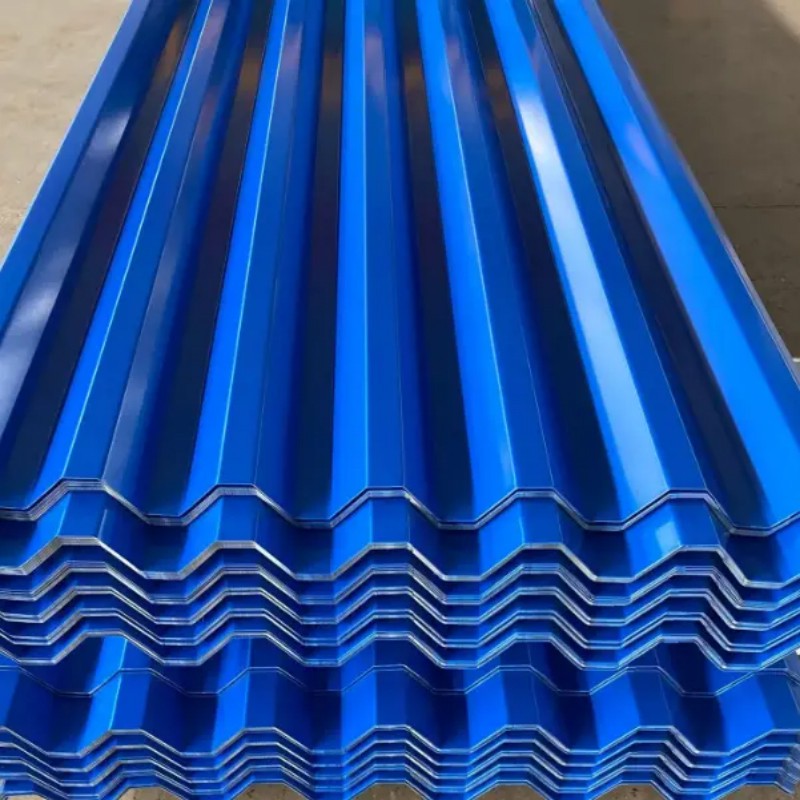
The color coated corrugated sheet is satisfied the stringent requirements for material color ,shape,quality,performance,and other aspects in the construction of large venues.

Corrugated Galvanized Steel Sheet
The structure of corrugated board solves the problem of its lack of strength well and increases its force capacity. Its rich geometry allows it to exhibit better resilience against pressure and tensile forces.

Aluminized zinc steel sheet surface is unique smooth, flat and gorgeous star flower, the base color is silver white. The special coating structure makes its excellent corrosion resistance.

Prepainted Steel Roofing Sheet
The color coated roofing sheet has lightweight, beautiful and good anti-corrosion performance, and can be directly processed, it provides a new type of raw material for the construction industry, shipbuilding industry, vehicle manufacturing industry, furniture industry, electrical industry, etc.

Mild steel chequered sheet is beautiful, it can be anti-slip, strengthen the performance, save steel and many other advantages. There are fields such as transportation, construction, decoration, equipment around the floor, machinery, shipbuilding, etcWide range of applications.

Hot rolled steel plate is divided into structural steel, low carbon steel, solder bottle steel, and then according to find the required steel according to a variety of steel, and then check the density and composition of the specific steel.

Zinc Magnesium Aluminum Coated Steel Sheet
Zinc magnesium aluminum coat steel sheet is an alloy metal,which is mainly used as a surface anti-corrosion treatment for steel and steel products,including various zinc series coatings and overall corrosion prection of a large number of steels.

Cold Rolled steel sheet the belt has a wide range of uses, such as automobile manufacturing, electrical products, rolling stock, aviation, precision instruments, food canning, etc.
Galvanized steel sheet beiongs to steel. The so-called galvanized sheetIt is to coat a layer of zinc on the surface of the steel plate, which can prevent the steel plate from being corroded and play a protective role. Galvanized steel sheetis a hot-rolled steel strip or cold-rolled steel strip as the substrate, through the continuous hot-dip galvanizing process and production, the product has strong corrosion resistance, good surface quality, conducive to deep processing, economical and practical characteristics, used as the substrate of downstream products, construction industry: light steel keel, corrugated board, ventilation duct, floor load-bearing plate, mobile room, plant roof, house, municipal engineering baffle, etc.
Advantages of Galvanized Sheet
Less maintenance/Lowest long term cost
Even in cases where the initial cost of galvanizing is higher than alternative coatings, galvanizing is almost invariably cheapest in the long term (because it lasts longer and needs less maintenance). And, maintenance causes problems and adds to costs when structures are located in remote areas, and when plant shutdown or disruption to production is involved.
Complete protection
Every part of a galvanized article is protected, even recesses, sharp corners and inaccessible areas. No coating applied to a structure or fabrication after completion can provide the same protection.
Toughest coating
A galvanized coating has a unique metallurgical structure which gives outstanding resistance to mechanical damage in transport, erection and service.
Automatic protection for damaged areas
Galvanized coatings corrode preferentially to steel, providing cathodic or sacrificial protection to small areas of steel exposed through damage. Unlike organic coatings, small damaged areas need no touch up.
Ease of inspection
Galvanized coatings are assessed readily by eye, and simple non-destructive thickness testing methods can be used. The galvanizing process is such that if coatings appear sound and continuous, they are sound and continuous.
Faster erection time
As galvanized steel members are received they are ready for use. No time is lost on-site in surface preparation, painting and inspection. When assembly of the structure is complete, it is immediately ready for use, or for the next construction stage.
Different Methods Galvanized Sheet of Galvanizing
Hot-Dip Galvanizing
The first and foremost method for galvanization is hot-dip galvanizing. The process is very similar to what the name suggests! In this method, steel or iron is dipped in a molten pool of zinc that maintains a temperature of around 860℉(460℃). This molten bath begins a metallurgical bond between the zinc and the receiving metal. After the metal is pulled from the bath, it reacts to being exposed to the atmosphere, and the pure zinc mixes with oxygen to form zinc oxide. The zinc-oxide further reacts to carbon dioxide and forms zinc carbonate, which makes up the final protective coating on the material. The tell-tale sign of a hot-dipped galvanized material is the presence of a crystalline-like pattern on the surface, sometimes referred to as "spangle."
The hot-dipped galvanizing method is an economical choice that can be quickly executed on both simple and complex shapes.
The new coated material can be worked and machined in a similar fashion to uncoated materials. Galvanized steel can be used in high-temperature applications up to 392℉, but use in temperatures exceeding that level will cause the zinc-carbonate layer to peel off.
Galvannealing
Galvannealing is the outcome of combining the annealing and hot-dip galvanizing processes in order to produce a specialized coating on steel. The process of galvanization is performed via hot-dipping and instantaneous annealing, which produces a matte gray finish.
Galvannealed steel is a zinc-iron alloy product, where the base metal is coated by the hot-dip process, then heated to induce alloying between the molten zinc coating and the steel. The resulting finish is a dull matte surface. Galvannealed steel is conducive to welding and the surface is excellent for paint adhesion.
Pre-galvanizing
Also similar to the hot-dip galvanizing method, but performed at the very first stage of production. Pre-galvanizing is a process that involves rolling the sheet metal through a cleaning agent to quickly prime material for galvanizing. Then, the metal is passed through a pool of molten liquid zinc and is immediately recoiled. The primary advantage of this method is that coils of steel sheet can be rapidly galvanized on a large scale with a more unified coating than the traditional hot-dipped method.
Electrogalvanizing
The most unique of these outlined methods, electrogalvanizing does not involve dipping the material in a molten vat of zinc. Instead, an electric current is introduced to an electrolyte solution that is applied to the steel, which reduces positively charged zinc ions to zinc metal – which is then deposited on the positively charged steel. Like pre-galvanizing, this method is typically done at the first stage of production.
Applications and Optimum Grades of Galvanized Sheet
Thanks to the overwhelming qualities of galvanized steel sheets, they are used in numerous sectors. They are specifically used in areas where you can anticipate higher chances of oxidation and corrosion. Now, depending on the galvanization process, and the overall quality of the galvanized steel sheets, they are divided into numerous grades. Depending on your need, you could choose the right galvanized steel sheet grade. A few of the optimum grades of galvanized steel sheets include A 446-76, SGC 340, and SGC 400. All of these are structural steel-grade galvanized steel sheets.
Quite like the different grades of galvanized steel sheets, the product also has numerous applications. A few of the many sectors that use galvanized steel sheets are as follows.
Wind And Solar Industries
Wind and Solar Industries are sectors where continuous workflow is needed. The use of galvanized steel sheets allows the industries to operate in a similar fashion. The steel sheets don't require maintenance for decades as this steel sheet type is extremely durable.
Agriculture Industry
The agriculture industry is yet another sector where galvanized steel sheet is used highly. The field requires tools and materials to be highly resilient and resistant to corrosion and oxidation. Galvanized Steel sheets have qualities that are ideal for fulfilling these needs.
Automotive Industry
It is quite a common thing to use galvanized steel sheets in the automotive industry, especially in the manufacturing of automobiles. Cars, buses, and so on have galvanized steel sheets used on the outer surfaces, which are more prone to corrosion and rust due to various factors.
Construction Industry
In the construction industry, galvanized steel sheet is used not just for the purpose of strength and longevity, but also for aesthetics. The shiny finish of the galvanized steel sheets adds that modern architectural zing to the structures erected by the construction industry.
Telecommunication Industry
The Telecommunication Industry uses a lot of tools, equipment, and devices, like telephone lines, boxes, towers, and so on, that are generally kept out in the open, and it is required for them to function for years without regular maintenance. Galvanized steel sheets allow for the continuous use of these resources.
How to Choose the Right Galvanized Sheet
Dimensions and specifications
When selecting galvanized steel, it is crucial to ensure that the dimensions and specifications of the project are correctly matched. First, understand the specific requirements of your project, including the thickness, width, and length of the board. This will help ensure that the steel panels will meet the structural and functional needs of the project. Remember, an accurate size and specification match will set the stage for a smooth project.
Coating type
Galvanized steel often has different types of coatings used to increase its corrosion resistance. Common coating types include hot-dip galvanizing, electro-galvanizing, and alloy coatings. Hot-dip galvanizing generally provides greater protection against corrosion and is suitable for more demanding environments. Electro-galvanizing is suitable for occasions that have higher requirements on the appearance of the plate. Select the appropriate coating type based on the specific circumstances and requirements of the project.
Performance requirements
Different projects have different performance requirements for galvanized steel panels. Some projects may require greater strength, while others may focus more on the workability of the board. When selecting galvanized steel, it is crucial to consider these performance requirements. Consult the manufacturer's specification sheet to learn about the strength, ductility, and other key performance indicators of each steel plate.
Manufacturer credibility and quality assurance
Choosing a reputable manufacturer is key to ensuring you get high-quality galvanized steel sheets. Check customer reviews and the manufacturer's quality assurance policy to ensure that the steel plate you purchase meets industry standards and will stand the test of time and environment.
At times, the questions arises – Whether you should galvanize sheet metal before or after fabrication process. Well, this may depend on many factors.
Here are some general rules when it comes to galvanized sheet metal fabrication:
Bending galvanized sheet metal – There are instance you may experience cracking when bending sheet metal after galvanization. There are two options here – you can repair the cracked sections, or use advanced sheet metal galvanization techniques.
Welding galvanized sheet metal – At times, achieving consistent and uniform weld may be a challenge. A reason you should monitor the entire welding process to ensure compatibility.
Depending on the sheet metal parts you are fabricating, you can galvanize after completing the welding process. However, at times this may not be possible.
Surface distorting – With proper design, you can easily eliminate possibility of surface distortion during sheet metal galvanization process.
For example, fabricating sheet metal parts with uniform thickness and symmetrical designs will significantly eliminate surface distortion or warping.
Prepare fabricated sheet metal surface before galvanization – You should clean and pre-treat the surface. This will ensure proper adhesion of zinc coating.
Assembling moving sheet metal parts – It is advisable to galvanize moving sheet metal parts separately.
Consider masking – In case you don't want to galvanize the entire surface of fabricated sheet metal part, masking is always ideal.
In addition to these, you must ensure the parts conform to the stipulated industry standards. For instance, the parts should comply with the ISO 1461:2009.
Maintenance and Cleaning Galvanized Sheet
Avoid long periods of exposure of your galvanized steel sheet to environments where the pH is below 6 and above 12. Outside the range of pH 6-12 the galvanized coating can suffer greater corrosion than normal.
Avoid direct contact of your galvanized steel sheet with dissimilar metals, such as brass and copper, particularly in corrosive environments. Where dissimilar metals are to be used together ensure that there is an insulator between the dissimilar metal and the galvanized steel sheet.
Do not constantly abrade clean your galvanized steel sheet and, where possible, avoid abrasive washing of your galvanized steel sheet altogether. One of the ways in which galvanizing protects steel from corrosion is by the development of a thin barrier film of insoluble zinc corrosion steel sheet (known as a patina) on the outer surface of the galvanized steel through exposure to the atmosphere. Abrasive cleaning will wash away this protective patina and the galvanized article will have to build up this barrier protection again, consuming more of the zinc. Constant abrasive cleaning will consume the zinc more quickly and therefore may reduce the life of your galvanized steel sheet.
Galvanizing may be cleaned using a water-based emulsifier, alkaline-based cleaners with a pH of 12 or lower or organic solvents. Then rinse the area with fresh water and simply wipe clean with a soft cloth.
For galvanizing steel sheet situated in a highly corrosive environment eg. coastal, heavy industrial, etc it is recommended the steel sheet be rinsed with potable water on a regular basis, particularly under sheltered conditions (i.e. not exposed to rain and sun).
Avoid long term storage of any galvanized steel sheet in damp and poorly ventilated conditions. Ensure the storage location is dry and there is effective ventilation.
Cleaning galvanized steel sheet surfaces
There are a number of ways of treating different types of stains or marks. It is advised that with any of the cleaning treatment of the galvanizing should be conservative at first and then if the situation demands, the treatment can become steadily more aggressive. It is also important that wherever some form of mechanical abrasion or "scrubbing" is required, a hard plastic bristle brush is recommended to be used. Steel bristle brushes are not to be used since they will cause discolouration.
It is important to note that mechanical methods of cleaning zinc surfaces can cause aesthetic issues. The "cleaned" areas are likely to contrast with adjacent untreated surfaces and may take a significant period of time to weather to a uniform colour. If aesthetics is a large concern, it is advisable to first test the cleaning method in an inconspicuous area in case the aesthetic effect is unappealing.
For general cleaning of bulk contaminants such as dirt and the like, ordinary laundry soaps can be satisfactorily used. For more stubborn or larger areas, the use of a low pressure wash (such as a gurney gun), with just pure water or in conjunction with proprietary cleaning materials such as car wash or truck wash, can be effective. The car and truck cleaners are made to minimise corrosion on the metallic parts of vehicles so are generally suitable for use on galvanized steel although it is important that the steel be washed down with freshwater after cleaning.
Many mild stains (such as those from water ponding and water runs or, in public areas, those from beverages such as beer, wine etc) can be removed with the use of common household ammonia cleaners, again being sure to thoroughly rinse the galvanized article with freshwater afterwards.
Often, water draining from other adjacent steelwork that is rusting can flow on to galvanized steel and cause conspicuous brown staining. This can be treated with the use of commercial oxalic acid or a proprietary solution that has been developed for descaling pots and pans. Thorough rinsing with water is again important to remove any corrosive residues of the cleaner.
Sometimes during building or renovations, cement and mortar can be dropped onto the galvanized steel and this can be very difficult to remove once it has hardened. Firstly remove the large parts of the deposit as close to the surface as practicable, then oxalic acid can be used to remove the remaining remnants from the galvanized steel, followed with a thorough rinsing. Other acids are more effective on the mortar or cement, but these can be very aggressive on zinc and are not recommended.
Paints, such as graffiti, can be removed using thinners. If some form of scraping is required, use plastic or wooden scrapers (not steel/metallic items). If the paint is wet or fresh, then normal thinners can be used. Once the paint has hardened, then a non-alkaline stripper can be used. Again, rinsing is important to remove residues that may cause discolouration later and/or encourage corrosion.
FAQ
Q: What is the difference between galvanized steel and regular steel?
Q: What is the purpose of galvanized steel?
Q: Is galvanized steel the same as sheet metal?
Q: Can galvanized steel rust?
Q: Is galvanised steel strong?
Q: How long does galvanized steel last?
Q: How to stop galvanized steel from rusting?
Q: Is galvanised steel suitable for outdoor use?
Q: Can galvanised steel be welded?
Q: How do you weatherproof galvanized steel?
Hot Tags: galvanized sheet 1219mm, China galvanized sheet 1219mm manufacturers, suppliers, factory, quality control steel sheet, color coated corrugated sheet, standardization steel sheet, flange steel sheet


