

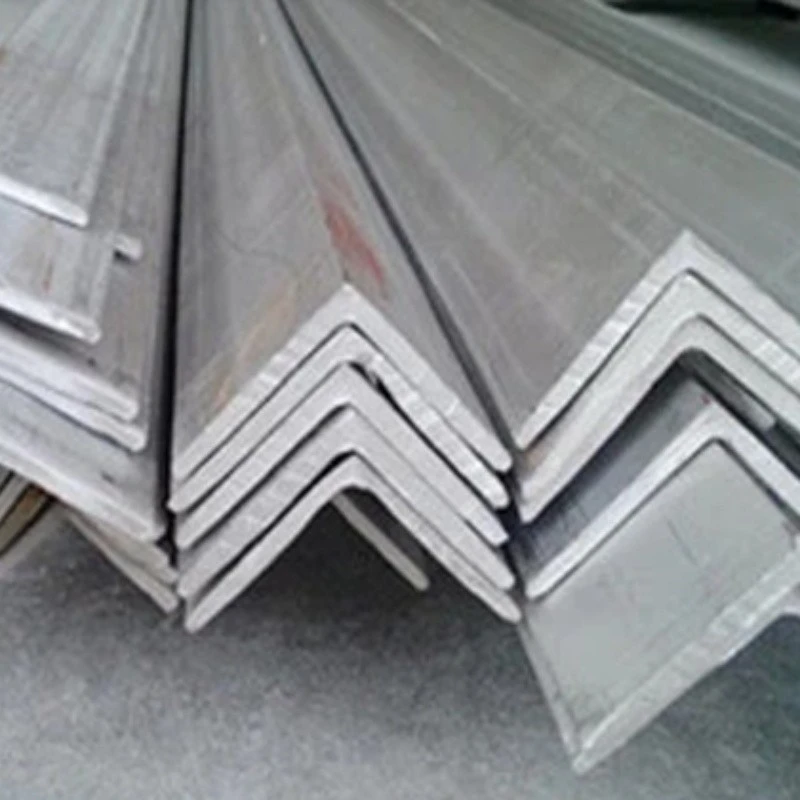
As a supplier of equal angle steel bars, I often encounter inquiries from customers about various technical aspects of these products. One question that frequently comes up is: What is the modulus of rupture of equal angle steel bars? In this blog post, I'll delve into this topic in detail, explaining what the modulus of rupture is, how it relates to equal angle steel bars, and why it matters in practical applications.
Understanding the Modulus of Rupture
The modulus of rupture, also known as the flexural strength, is a measure of a material's ability to resist bending forces before it breaks. When a load is applied to a beam or a bar in a way that causes it to bend, the material experiences both tensile and compressive stresses. The modulus of rupture represents the maximum bending stress that the material can withstand without failing.

Mathematically, the modulus of rupture (σr) can be calculated using the following formula for a simply supported beam with a concentrated load at the center:
σr = (3FL) / (2bd²)
Where:
- F is the maximum load applied at the center of the beam
- L is the span length of the beam
- b is the width of the beam
- d is the depth of the beam
In the context of equal angle steel bars, the modulus of rupture is an important property because these bars are often used in structural applications where they are subjected to bending loads. For example, they can be used as frames, supports, or braces in buildings, bridges, and machinery.
Factors Affecting the Modulus of Rupture of Equal Angle Steel Bars
Several factors can influence the modulus of rupture of equal angle steel bars. These include:
Material Composition
The chemical composition of the steel plays a significant role in determining its mechanical properties, including the modulus of rupture. Steel is an alloy primarily composed of iron and carbon, with small amounts of other elements such as manganese, silicon, sulfur, and phosphorus. The presence of these elements can affect the strength, ductility, and toughness of the steel. For example, increasing the carbon content generally increases the strength of the steel but reduces its ductility.
Heat Treatment
Heat treatment is a process used to alter the microstructure of the steel and improve its mechanical properties. Common heat treatment processes for steel include annealing, quenching, and tempering. Annealing involves heating the steel to a specific temperature and then cooling it slowly to relieve internal stresses and improve its ductility. Quenching, on the other hand, involves rapid cooling to increase the hardness of the steel. Tempering is often done after quenching to reduce the brittleness and improve the toughness of the steel. The type and duration of heat treatment can have a significant impact on the modulus of rupture of equal angle steel bars.
Cross-Sectional Shape and Size
The cross-sectional shape and size of the equal angle steel bar also affect its modulus of rupture. The shape of the angle bar determines how the bending stresses are distributed within the bar. A larger cross-sectional area generally results in a higher modulus of rupture because it can withstand greater loads without failing. Additionally, the ratio of the leg lengths of the angle bar can also influence its bending behavior.
Manufacturing Process
The manufacturing process used to produce the equal angle steel bars can also affect their modulus of rupture. For example, hot-rolled steel bars are generally stronger and more ductile than cold-rolled bars because the hot-rolling process allows the steel to recrystallize and develop a more uniform microstructure. However, cold-rolled bars may have a smoother surface finish and more precise dimensions.
Importance of the Modulus of Rupture in Practical Applications
The modulus of rupture is an important consideration in the design and selection of equal angle steel bars for various applications. Here are some reasons why:
Structural Integrity
In structural applications, the modulus of rupture ensures that the equal angle steel bars can withstand the bending loads they are expected to encounter without failing. This is crucial for maintaining the structural integrity of buildings, bridges, and other structures. If the modulus of rupture is too low, the bars may bend or break under load, leading to structural failure.
Safety
Safety is a top priority in any engineering project. By selecting equal angle steel bars with an appropriate modulus of rupture, engineers can ensure that the structures they design are safe for use. This helps to prevent accidents and protect the lives and property of people who use these structures.
Cost-Effectiveness
Using equal angle steel bars with the right modulus of rupture can also be cost-effective. If the bars are over-designed with a much higher modulus of rupture than necessary, it can lead to unnecessary material costs. On the other hand, if the bars are under-designed, they may need to be replaced or reinforced, which can also be costly. By accurately determining the required modulus of rupture, engineers can select the most cost-effective bars for the application.
How We Ensure High Modulus of Rupture in Our Equal Angle Steel Bars
As a supplier of equal angle steel bars, we take several steps to ensure that our products have a high modulus of rupture and meet the quality requirements of our customers.
Quality Control
We have a strict quality control system in place to monitor the production process from start to finish. This includes testing the raw materials for their chemical composition and mechanical properties, as well as conducting non-destructive testing on the finished products to detect any defects. We also perform regular inspections and audits to ensure that our manufacturing processes comply with international standards.
Advanced Manufacturing Technology
We use advanced manufacturing technology to produce our equal angle steel bars. Our production facilities are equipped with state-of-the-art equipment that allows us to control the manufacturing process precisely. This helps to ensure that the bars have a uniform microstructure and consistent mechanical properties, including a high modulus of rupture.
Customization
We understand that different customers have different requirements for their equal angle steel bars. That's why we offer customization services to meet the specific needs of our customers. We can produce bars in different sizes, shapes, and grades, and we can also provide heat treatment and surface treatment services to enhance the properties of the bars.
Conclusion
In conclusion, the modulus of rupture is an important property of equal angle steel bars that determines their ability to resist bending loads. It is influenced by factors such as material composition, heat treatment, cross-sectional shape and size, and manufacturing process. By understanding the modulus of rupture and its importance in practical applications, engineers can select the most appropriate equal angle steel bars for their projects.
As a supplier of equal angle steel bars, we are committed to providing high-quality products with a high modulus of rupture. If you are interested in purchasing equal angle steel bars for your project, please feel free to contact us. We would be happy to discuss your requirements and provide you with a quote. You can also visit our website to learn more about our products, including LTZ Profile, Wire Rod Coil, and Galvanized Steel Angle.
References
- "Metallurgy and Mechanics of Welding" by John F. Lancaster
- "Structural Steel Design" by Jack C. McCormac
- "Materials Science and Engineering: An Introduction" by William D. Callister, Jr. and David G. Rethwisch