

Wire meshes are versatile products used in a wide range of industries, from construction and agriculture to filtration and security. As a PC wire and wire mesh supplier, I've had the opportunity to work with various materials to create these essential products. In this blog post, I'll share some of the most common materials used to make wire meshes and their unique properties.
Stainless Steel
Stainless steel is a popular choice for wire meshes due to its excellent corrosion resistance, strength, and durability. It contains a minimum of 10.5% chromium, which forms a protective oxide layer on the surface, preventing rust and other forms of corrosion. This makes stainless steel wire meshes ideal for outdoor applications, such as fencing, screening, and architectural features.
There are several grades of stainless steel available, each with its own composition and properties. The most common grades used for wire meshes are 304 and 316. Grade 304 is a general-purpose stainless steel that offers good corrosion resistance and is suitable for most applications. Grade 316, on the other hand, contains molybdenum, which enhances its corrosion resistance, especially in harsh environments, such as coastal areas or chemical processing plants.
Stainless steel wire meshes can be woven or welded, depending on the application. Woven meshes are made by interlacing wires in a crisscross pattern, creating a flexible and uniform structure. Welded meshes, on the other hand, are made by welding the wires at their intersections, creating a rigid and strong structure. Both types of meshes are available in a variety of sizes and configurations to meet the specific needs of different applications.
Galvanized Steel
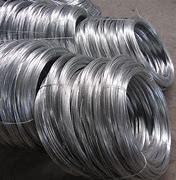
Galvanized steel is another popular material used to make wire meshes. It is made by coating steel with a layer of zinc, which provides excellent corrosion resistance. Galvanization can be done through hot-dip galvanizing or electro-galvanizing. Hot-dip galvanizing involves immersing the steel in a bath of molten zinc, while electro-galvanizing involves depositing a layer of zinc on the steel through an electrochemical process.
Galvanized steel wire meshes are commonly used in construction, agriculture, and fencing applications. They are strong, durable, and relatively inexpensive, making them a cost-effective choice for many projects. However, the zinc coating can wear off over time, especially in harsh environments, which can lead to corrosion. To extend the lifespan of galvanized steel wire meshes, they can be coated with a protective paint or powder coating.
If you're interested in learning more about galvanized steel wire, you can check out our Galvanized Steel Wire page.
Aluminum
Aluminum is a lightweight and corrosion-resistant material that is often used to make wire meshes for applications where weight is a concern. It is also non-magnetic, which makes it suitable for use in electronic and electrical applications. Aluminum wire meshes are commonly used in HVAC systems, filtration, and decorative applications.
Aluminum wire meshes are available in a variety of alloys, each with its own properties and characteristics. The most common alloy used for wire meshes is 6061, which is a heat-treatable alloy that offers good strength and corrosion resistance. Aluminum wire meshes can be woven or welded, depending on the application. Woven meshes are more flexible and can be easily formed into different shapes, while welded meshes are more rigid and offer better strength and stability.
Brass
Brass is an alloy of copper and zinc that is known for its excellent corrosion resistance, conductivity, and aesthetic appeal. It is often used to make wire meshes for decorative applications, such as jewelry, art, and architecture. Brass wire meshes are also used in filtration and screening applications, where their corrosion resistance and fine mesh size make them ideal for separating small particles.
Brass wire meshes are available in a variety of colors and finishes, including yellow brass, red brass, and nickel silver. They can be woven or welded, depending on the application. Woven meshes are more flexible and can be easily formed into different shapes, while welded meshes are more rigid and offer better strength and stability.
Copper
Copper is a highly conductive and corrosion-resistant material that is often used to make wire meshes for electrical and electronic applications. It is also antibacterial, which makes it suitable for use in food processing and medical applications. Copper wire meshes are commonly used in electromagnetic shielding, grounding, and filtration applications.
Copper wire meshes are available in a variety of sizes and configurations, depending on the application. They can be woven or welded, depending on the specific requirements of the project. Woven meshes are more flexible and can be easily formed into different shapes, while welded meshes are more rigid and offer better strength and stability.
Nylon
Nylon is a synthetic polymer that is known for its high strength, flexibility, and chemical resistance. It is often used to make wire meshes for applications where a lightweight and flexible material is required. Nylon wire meshes are commonly used in filtration, screening, and separation applications, where their fine mesh size and high strength make them ideal for separating small particles.
Nylon wire meshes are available in a variety of colors and sizes, depending on the application. They can be woven or welded, depending on the specific requirements of the project. Woven meshes are more flexible and can be easily formed into different shapes, while welded meshes are more rigid and offer better strength and stability.
Polyester
Polyester is another synthetic polymer that is commonly used to make wire meshes. It is known for its high strength, durability, and resistance to chemicals and UV radiation. Polyester wire meshes are commonly used in filtration, screening, and separation applications, where their fine mesh size and high strength make them ideal for separating small particles.
Polyester wire meshes are available in a variety of colors and sizes, depending on the application. They can be woven or welded, depending on the specific requirements of the project. Woven meshes are more flexible and can be easily formed into different shapes, while welded meshes are more rigid and offer better strength and stability.
Conclusion
Wire meshes are essential products used in a wide range of industries, and the choice of material depends on the specific application and requirements. Stainless steel, galvanized steel, aluminum, brass, copper, nylon, and polyester are some of the most common materials used to make wire meshes, each with its own unique properties and characteristics.
As a PC wire and wire mesh supplier, we offer a wide range of wire meshes made from different materials to meet the specific needs of our customers. Whether you're looking for a corrosion-resistant mesh for outdoor applications or a fine mesh for filtration, we have the expertise and experience to provide you with the right product.

If you're interested in learning more about our wire meshes or have any questions, please don't hesitate to contact us. We'd be happy to help you find the right solution for your project.
References
- ASM Handbook, Volume 1: Properties and Selection: Irons, Steels, and High-Performance Alloys
- Metals Handbook Desk Edition, Third Edition
- The Encyclopedia of Materials Science and Engineering