

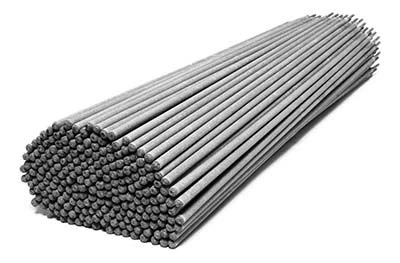
Product Overview
Alloy steel round bars integrate carbon steel with micro-alloying elements such as chromium, molybdenum, and nickel to deliver deep hardenability, high tensile strength, and impact resistance exceeding standard carbon grades. Produced in hot-rolled, forged, or cold-drawn states, these bars form the raw material foundation for high-stress mechanical components.
Manufacturing operations utilize 1,500T hydraulic forging presses, continuous rolling mills, and automated heat-treatment lines to process diameters from 16mm to 800mm with controlled internal structures and uniform grain flow.
Technical Specifications
|
Parameter |
Specification Details |
|
Common Grades |
AISI 4140, 4340, 8620, 5140, 20CrMnTi, 42CrMo4, 34CrNiMo6 |
|
Standard Compliance |
ASTM A29, ASTM A322, EN 10083, JIS G4053 |
|
Size Range |
Hot Rolled: 16mm - 300mm Forged: 250mm - 800mm |
|
Delivery Condition |
Annealed, Normalized, Quenched & Tempered (Q&T), As-Rolled |
|
Surface Finish |
Black, Peeled (K12/K13), Turned & Polished, Centerless Ground |
|
Length |
3m to 12m random length, or precision cut-to-length per drawing |
|
Straightness |
Max 1.5mm/m (stricter tolerances available for automated CNC feed) |
Product Advantages
Core Hardenability:
Controlled alloy ratios maintain stable mechanical properties from surface to center across heavy cross-sections.
Machinability Optimization:
Supplied in annealed or spheroidized structures to reduce tool wear during high-speed CNC turning and milling operations.
Internal Soundness:
Ladle refining, vacuum degassing, and electromagnetic stirring minimize non-metallic inclusions and central porosity.
Direct-to-CNC Readiness:
Precision peeling and centerless grinding remove surface decarburization, allowing immediate loading into automated lathes.
Applications
Oil & Gas: Drill collars, tool joints, valve stems, and downhole motor shafts.
Automotive & Heavy Duty: Transmission gears, axle shafts, crankshafts, and connecting rods.
Power Generation: Turbine shafts, generator rotor components, and high-load industrial fasteners.
Machinery Manufacturing: Hydraulic cylinder pistons, plastic injection molding machine tie bars, and industrial roller shafts.
Customization & Processing
Saw Cutting:
High-speed industrial band saws handle cut-to-length requirements from 50mm to 6000mm with length tolerances within +/- 1.0 mm.
Heat Treatment:
In-house roller hearth furnaces perform quenching, tempering, and stress relieving to hit target hardness windows (e.g., 28-32 HRC or specific Brinell ranges).
Surface Finishing:
Rough turning, finish peeling, and centerless grinding achieve surface roughness values down to Ra 0.8 um.
Forging Execution:
Non-standard diameters and stepped shaft blanks are produced via open-die forging with fiber continuity maintained along the contour.
Quality Control & Inspection
Chemical Composition: Direct-reading spectrometers verify melt chemistry against ladle analysis requirements prior to dispatch.
Mechanical Testing: Tensile testing machines, Charpy V-notch impact testers, and Rockwell/Brinell hardness testers verify yield strength, elongation, and impact energy per heat lot.
NDT Inspection: Ultrasonic testing (UT) performed per ASTM A388 or EN 10308 to inspect for internal discontinuities, voids, and segregations.
Dimensional Control: Laser micrometers and multi-point calipers monitor diameter tolerance and ovality across the entire bar length.
Certification: EN 10204 3.1 Mill Test Certificate (MTR) provided for every production lot, with downloadable digital samples available upon request.
Packaging & Shipping
Bundling: Bundled with heavy-duty steel strapping and secured with wooden spacers to prevent shifting during transit.
Surface Protection: Anti-rust oil coating applied to all bare metal surfaces; optional VCI (Vapor Corrosion Inhibitor) wrapping for ocean freight exposure.
Identification: Each bar is stenciled or metal-tagged with steel grade, heat number, dimensions, and lot code for total traceability.
Logistics: Containerized loading for port delivery or break-bulk shipping for oversized forged bars, utilizing secured chocking and dunnage.
Quality Control & Inspection
Spectrochemical Analysis: Direct-reading spectrometer verifies carbon, manganese, silicon, and alloy element percentages against designated standards.
Mechanical Testing: Universal tensile testing machines measure yield strength, tensile strength, and elongation; Brinell and Rockwell hardness testers verify heat treatment consistency.
Non-Destructive Testing (NDT): Ultrasonic testing (UT) per ASTM A388 or SEP 1921 is available to check for internal micro-voids, center cracks, and inclusion clusters in bars over 50 mm.
Dimensional Audits: Laser micrometers and multi-point caliper checks monitor out-of-roundness and diameter tolerance along the entire bar length.
FAQ
Q: What is the standard MOQ for alloy steel round bars?
A: MOQ is 2 metric tons per size for standard stock grades. For custom diameters, specific heat treatments, or non-standard lengths, MOQ is determined by rolling or forging batch economy.
Q: Can you provide Ultrasonic Testing (UT) reports with the shipment?
A: Yes. UT testing per ASTM A388 or EN 10308 can be executed upon request, and detailed inspection reports are included in the 3.1 Mill Test Certificate package.
Q: What is the difference between peeled bars and hot-rolled black bars?
A: Hot-rolled black bars retain surface scale and minor decarburization from the rolling mill. Peeled bars have the outer layer removed via lathe cutting, providing precise diameter tolerances (such as h11 or h12) with zero surface defects, ready for direct CNC loading.
Q: How do you ensure hardness uniformity across large-diameter bars?
A: Uniform hardness is achieved through controlled alloy chemistry (optimized Mo and Cr content), precise austenitizing temperature control, and polymer-water quenching followed by soaking schedules matched to the cross-sectional mass.
Q: What are your standard delivery lead times?
A: Stock items ship within 7 to 10 days. Custom rolling, forging, or heat-treated production runs typically require 25 to 35 days depending on mill scheduling.
Q: Do you support third-party inspection services?
A: Yes. Inspections by SGS, BV, or TUV can be arranged prior to shipment at the buyer's request and specification.
Request a Quote
To receive an accurate and prompt quotation, please provide the following details:
Steel Grade: (e.g., AISI 4140, 4340, 42CrMo4)
Dimensions: Diameter and exact length or cut pieces required
Condition: Heat treatment state and surface finish (Black, Peeled, Ground)
Quantity: Total tonnage or piece count
Destination Port / Delivery Term: (FOB, CIF, CFR)
Hot Tags: alloy steel round bar, China alloy steel round bar manufacturers, suppliers, factory